

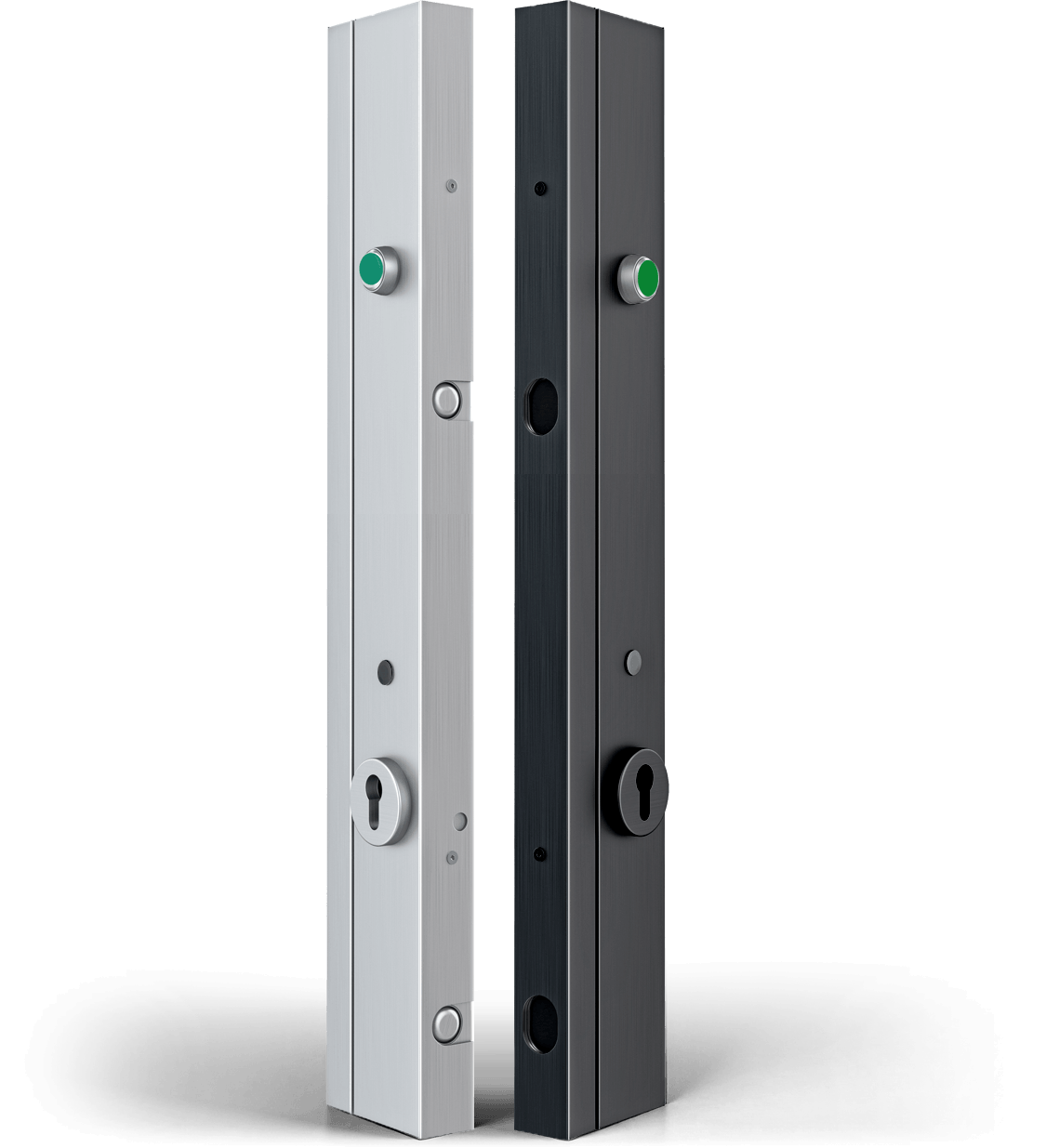

Upgrade the security of your offices and commercial premises without replacing your doors
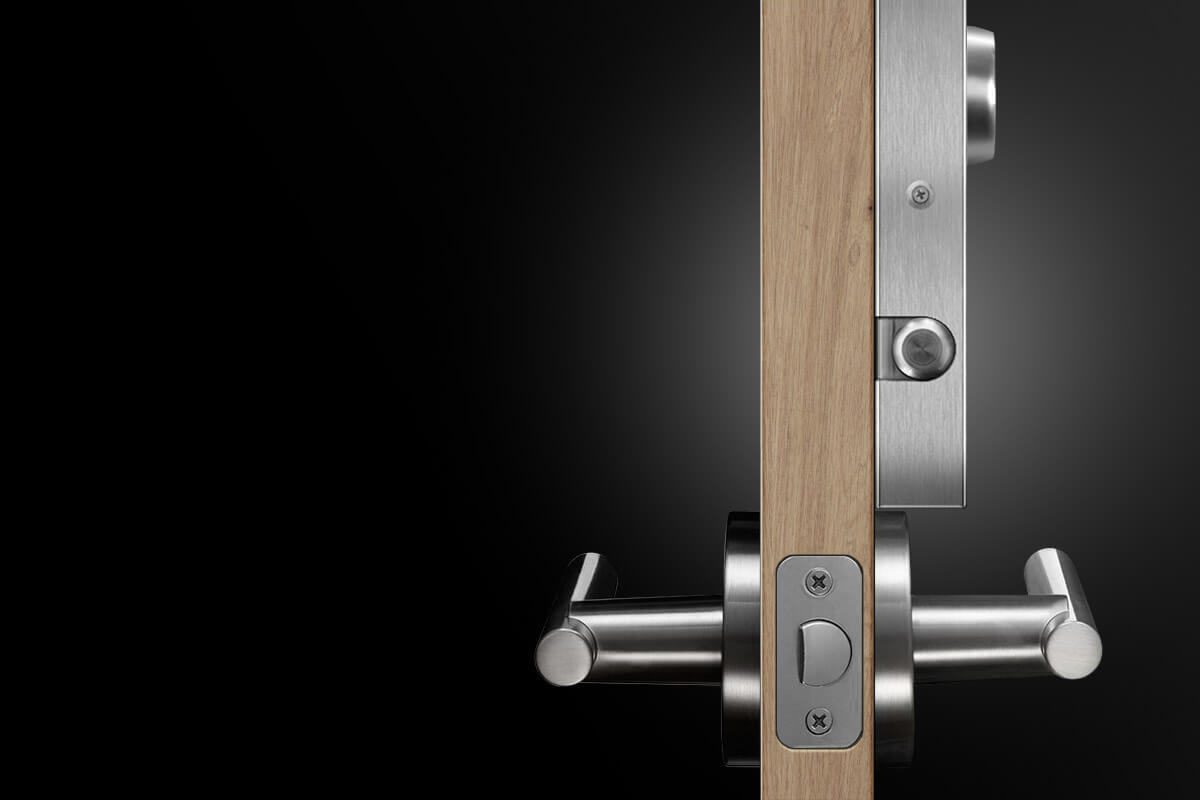
Improving burglary protection in offices, shops and other commercial premises usually means replacing the existing doors. The new Veltra lock upgrades their resistance by addressing their main weak point. It is the ideal solution for offices, small businesses holding valuable goods, town halls, pharmacies and listed or heritage buildings.

Motorized bolt electric lock
Designed for access control, it can be unlocked electrically or mechanically, with the bolts secured in either the extended or retracted position.

Quick installation with minimal tools
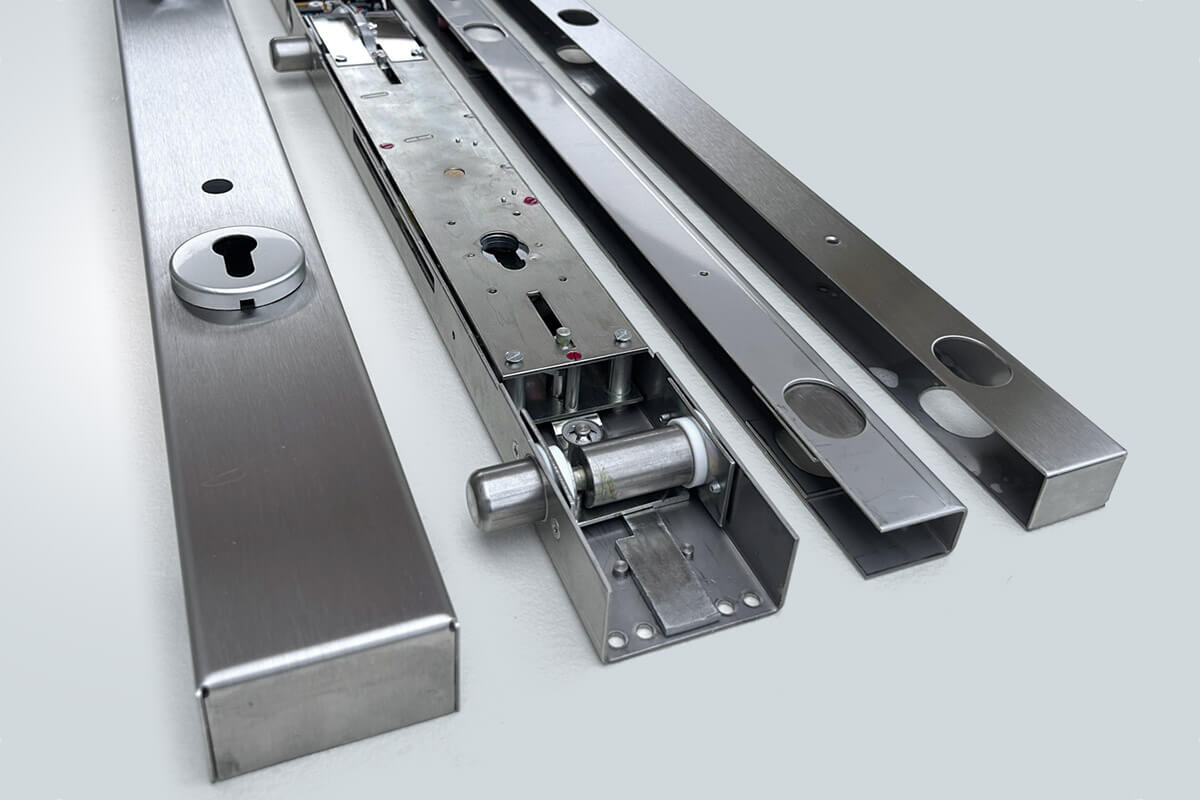
Veltra is designed for retrofit applications: a drill and a screwdriver are pretty much all you need to install this surface-mounted lock.

Reversible lock
Whatever the opening direction of your door (inward, outward, left or right), the slim-profile Veltra lock adapts to the door configuration and can be adjusted in height.

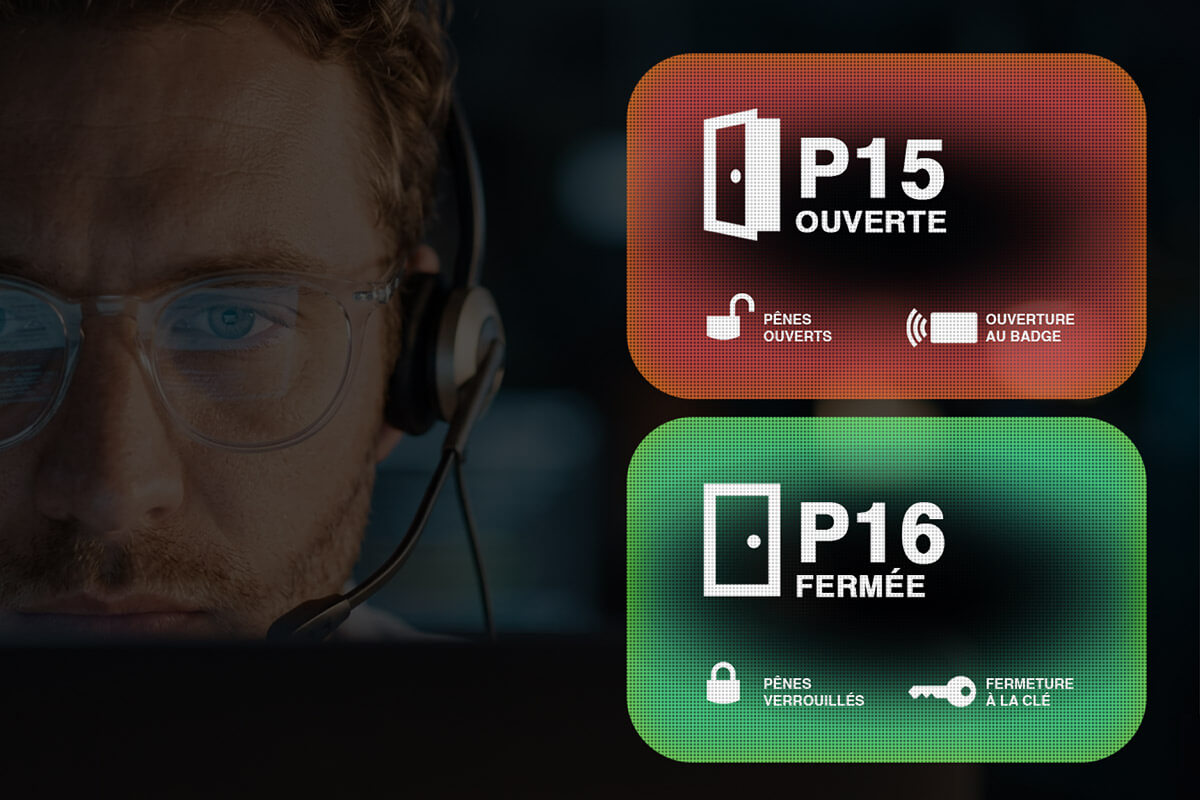
Complete status monitoring
Thanks to its integrated interlocking function, the electronics provide complete monitoring of all statuses: open, closed, cover status, alarm and more.

Exit push button
Ergonomic, clearly visible and intuitive, the push button allows the door to be opened with a simple press.

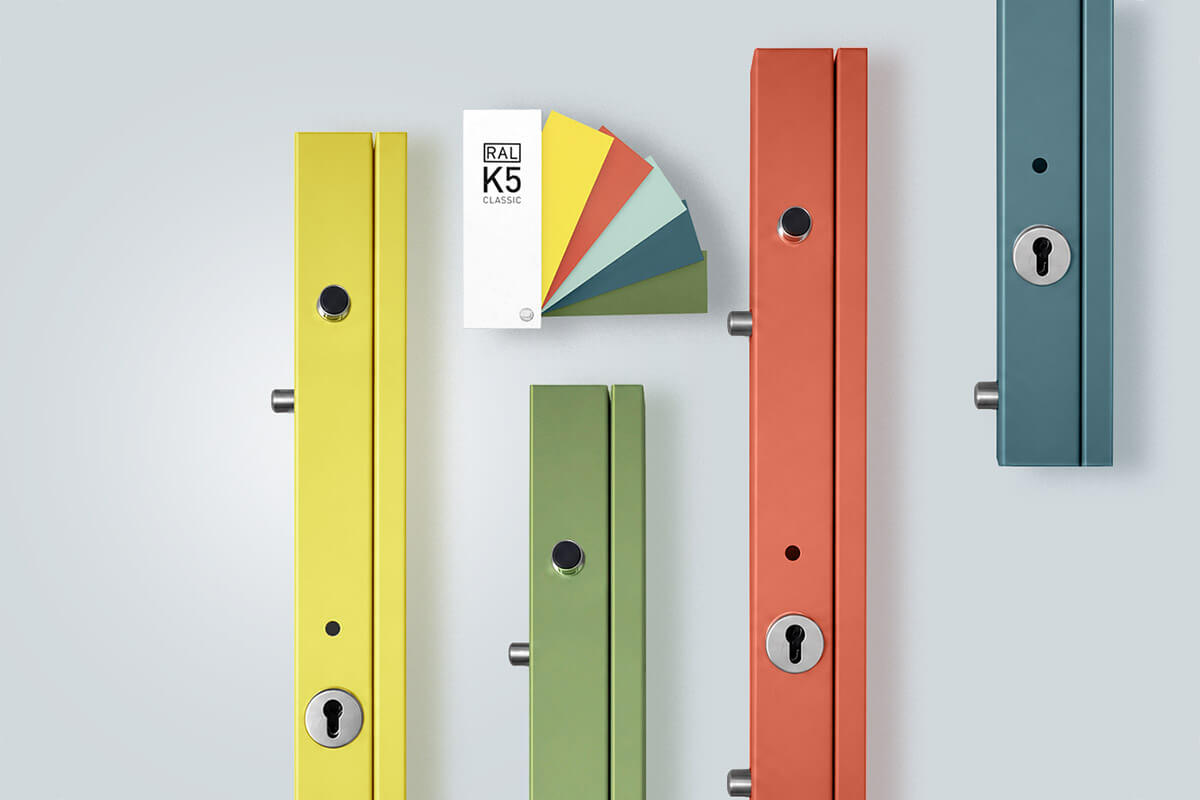
Customizable color
Want the lock to match its surroundings? The lock covers can be painted to order in the color of your choice.
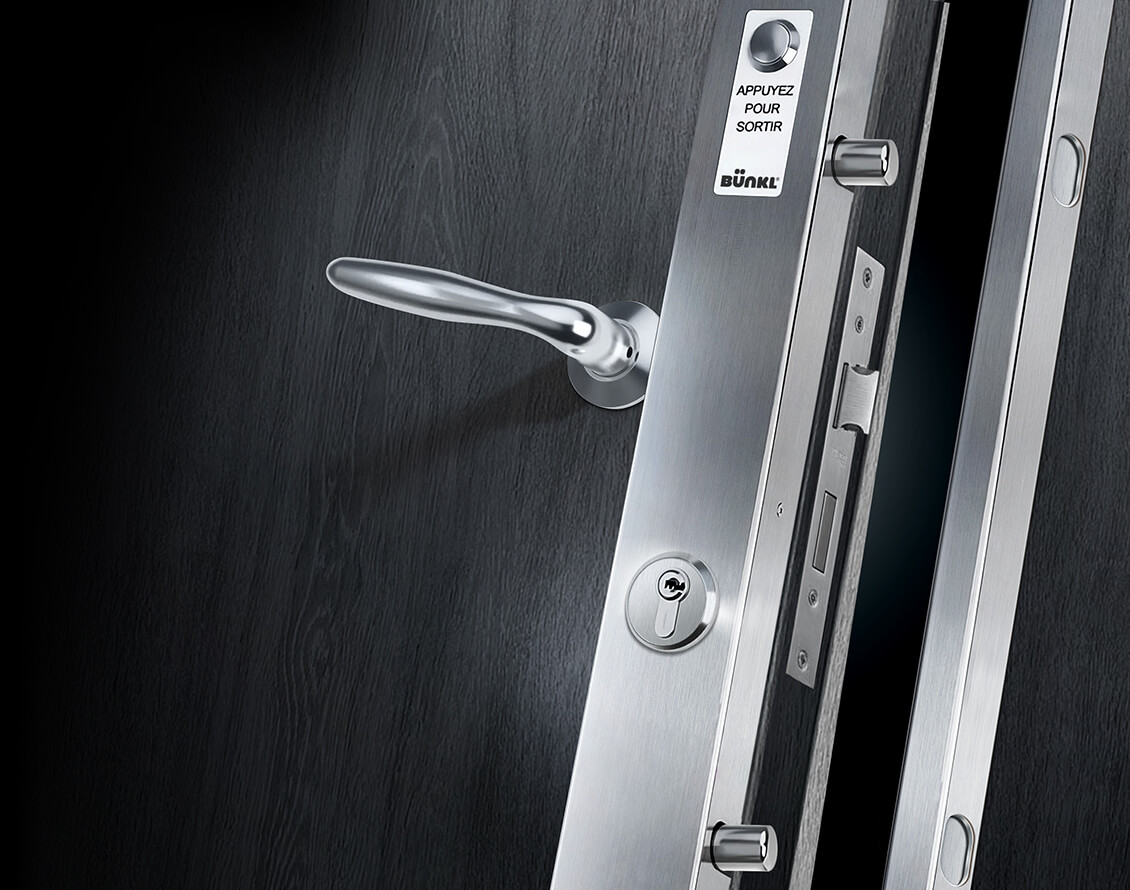

Tobacconist, business owner, security manager…
Professionals speak out…

“My company premises are now properly protected, at half the budget”
No business can afford to overlook security these days. But meeting security requirements on a tight budget is not always easy. With the Veltra lock, we were able to upgrade our office doors without replacing them, while also adding access control. We went from a level equivalent to CR1 to CR3 simply by adding modern locks.
— Martial, 47, Security Manager

“I reinforced the security of my tobacco shop storage room without replacing the door”
A tobacco shop is not an ordinary business. We hold valuable products that are highly sought after and easy to resell. For insurance and budget reasons, I simply reinforced the existing door to my storage room by addressing its weak point with the Veltra lock.
— Denis, 36, Tobacconist

“We needed to secure access to sensitive pharmaceutical products without closing the clinic to replace our doors”
The storage of pharmaceutical substances requires strict control of access by authorized personnel. The Veltra lock solution proposed by Bünkl enabled us to implement a complete access control and monitoring system without major construction work or any interruption to our operations.
— Hélène, 54, Senior Nurse

“Replacing the oak door was impossible for heritage conservation reasons. The only solution was to add a lock”
The town hall's century-old oak door was structurally sound, but its lock was its weak point. By installing a new surface-mounted lock, we preserved the historic door while adding modern security. Replacing the entire door was simply not an option.
— Hubert, 54, Mayor
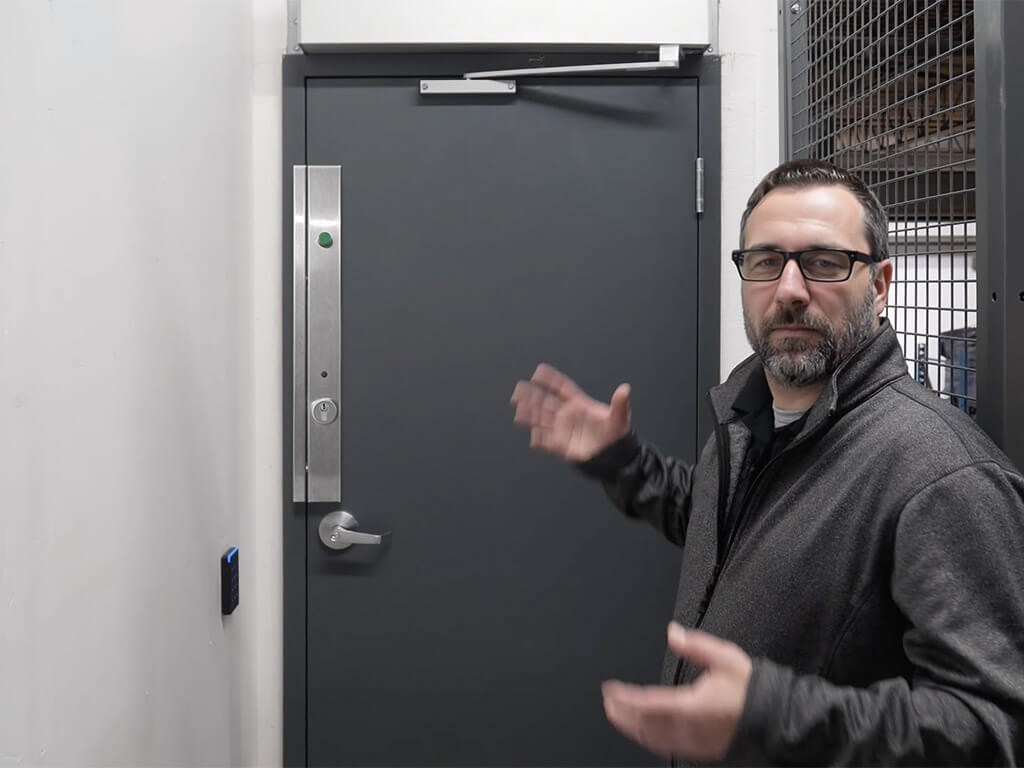
“I needed an affordable solution that could be deployed within 24 hours to eliminate any security gap”
Maintaining security and access control while being able to remotely monitor the various door and lock statuses was my priority. The Veltra lock, installed in just a few hours, achieved all these objectives at a cost and within a timeframe that cannot be compared with a complete door replacement.
— Yves, 52, Operations Manager
Discover the product benefits
of the Dény Veltra motorized electric lock
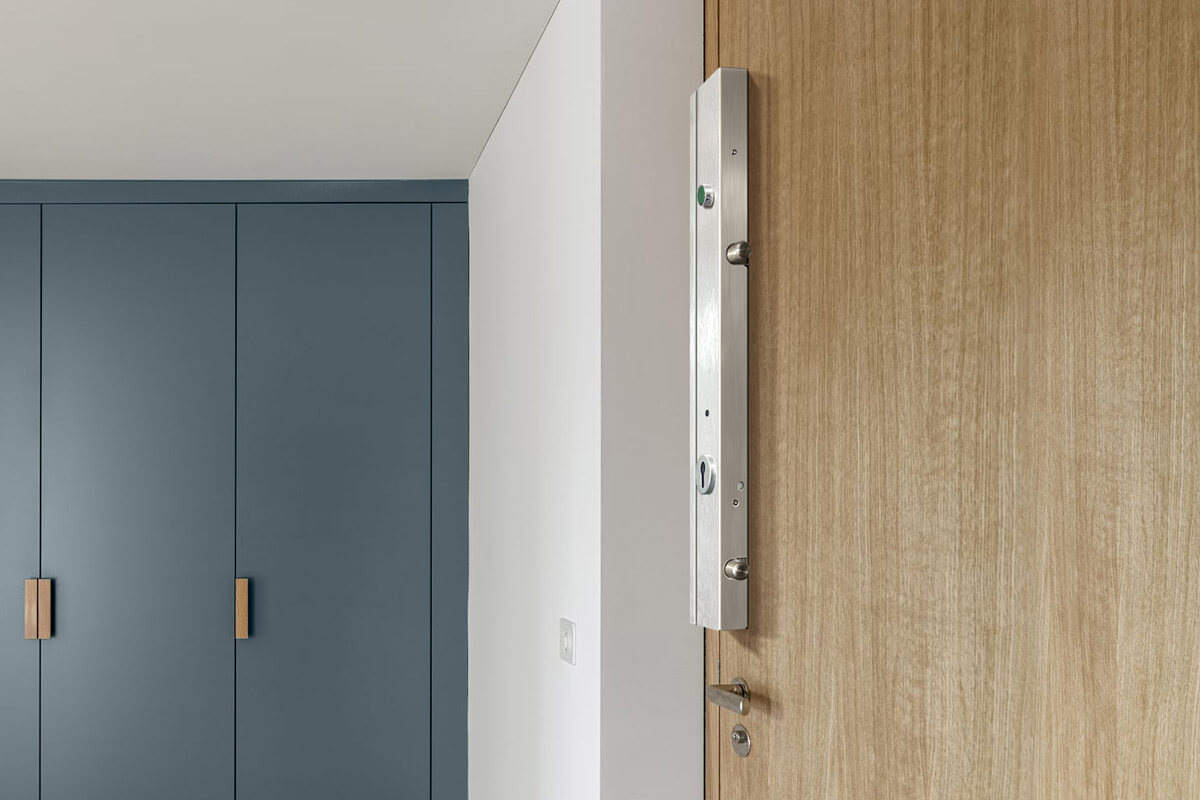
Compare the benefits of the Veltra electric lock
versus a mechanical lock and complete door replacement
| Veltra lock | Mechanical lock | Suction pad | New door | |
|---|---|---|---|---|
| Existing door retained | ✓ | ✓ | ✓ | ✕ |
| Access control | ✓ | None | ✓ | Depending on configuration |
| Physical lock | ✓ | ✓ | ✕ | Depending on configuration |
| Installation work | Very limited | Moderate | Very limited | Extensive |
| Status feedback | Full | None | Not complete | Depending on configuration |
| In case of power failure | Can be opened | No impact | No longer locks | Depending on configuration |
| Impact on operations | Low | Moderate | Low | Significant |
Questions about the motorized electric lock?
Here are the answers…
Replacing an existing door is not always necessary to improve its resistance to forced entry. When the door leaf and frame are still sufficiently robust, the locking system can be reinforced as a priority. The lock is indeed a key element of a door’s security. A solid door fitted with an outdated or insufficiently resistant locking system can have a significant weak point. The Dény Veltra motorized lock was specifically designed for this type of retrofit. Surface-mounted, it strengthens the locking of an existing door without requiring complete replacement of the door set.
Yes, provided that the door and its surrounding structure are compatible with the selected solution. In a commercial premises, there may be no need to replace a mechanically sound door simply because its lock has become inadequate. The Veltra motorized electric lock can be used to reinforce doors providing access to a stockroom, valuable inventory, office, technical room or restricted-access area. This approach is particularly useful when several doors need to be upgraded without undertaking the work and costs associated with completely replacing the door sets and the potential loss of business during the works.
A pharmacy may contain several areas where access should be restricted to authorized personnel: stockrooms, storage areas for sensitive products, technical rooms, offices or administrative areas. A motorized electric lock with access control can complement the physical protection of the door with electronic access management. The door can therefore be unlocked by an access control system while retaining robust motorized locking. Veltra can also provide several status signals relating to the condition of the door and lock, which can be particularly useful in professional environments requiring access monitoring.
The Veltra motorized electric lock is primarily intended for businesses and building managers who need to secure existing doors without necessarily replacing them. It can meet the needs of:
- Tobacco shops and businesses handling valuable products
- Pharmacies and healthcare facilities
- Companies and offices
- Town halls and local authorities
- Museums and heritage buildings
- Public-access buildings
- Industrial sites and technical premises
- Building managers and site managers
- Security managers and security officers
- Operators looking to reinforce several existing doors
It is particularly relevant when the existing door needs to be retained for technical, architectural, heritage or economic reasons.
Veltra is not primarily intended for the entrance doors of houses or apartments. It is a high-security motorized electric lock designed for professional applications. Its access control, status feedback, automatic relocking and monitoring functions are particularly useful in buildings where several people need to access a secure area according to defined rules.
Veltra is a motorized electric lock. Its bolts are electrically operated by the access control system. It also provides a mechanical override, allowing an independent backup solution in case of a failure of the normal access control system. The lock operates at 12 VDC and can receive an unlocking command via a momentary dry contact.
Yes. This is one of Veltra’s main professional applications. It is compatible with all access control systems and can receive an unlocking command via a dry contact. It can therefore be connected to various access control devices: badge reader, keypad, biometric reader, control button, access control panel or any other device providing a dry contact. The access control system identifies the authorized user and then sends the opening command to the lock. The door can then be automatically relocked after closing.
Yes. A biometric reader can control the Veltra motorized electric lock if it has a compatible relay output or dry contact. The reader identifies the authorized user and then sends a pulse to the lock to unlock it. After the user has passed through and the door has closed, the Veltra motorized electric lock can automatically relock. This configuration makes it possible to turn an existing door into a biometric access-controlled door without necessarily replacing the door set.
Yes. The lock has several contacts that provide information about its status. Depending on the wiring configuration, the system can monitor the door position, bolt position and cover status. This information can be used by an access control panel or monitoring system to detect an abnormal situation.
Yes. The lock is designed to provide automatic relocking after the door has been opened and closed. The delay can be adjusted according to the application. If the lock is unlocked but the door is not actually opened, it can also automatically relock after the configured delay. This function helps prevent a door from being accidentally left unlocked after a user has passed through.
Yes. Veltra includes an interlocking function for managing certain access control configurations that require coordinated door openings. This feature can be particularly useful in professional installations where several doors need to be coordinated or where precise control over access conditions to a secure area is required.
Veltra follows a different approach from a traditional mechanical multipoint lock. It is primarily designed for retrofit, burglary resistance upgrades and access control. Its two 22 mm diameter motorized bolts secure the door and are designed to resist mechanical attacks, notably thanks to their rotating design, which makes sawing more difficult. However, the choice between a mechanical multipoint lock and a motorized lock depends on the door, the required security level and the access control functions needed.
Yes, provided that the door, its frame and their fixings have sufficient strength to accommodate the new locking system. Retrofitting an old door should always begin with an assessment of the existing installation. An old door can be perfectly suitable for reuse if its structure is sound, while its locking system may have become its main weak point. In this case, reinforcing the locking system may be more appropriate than replacing the entire door. This approach is also relevant for certain historic or heritage buildings.
Yes. Town halls and local authorities often have buildings equipped with doors from different generations and using different technologies. Veltra can be used to secure sensitive access points such as offices, archives, storage rooms, technical rooms, administrative areas or spaces containing valuable equipment. Its integration with an access control system makes it possible to restrict access to authorized personnel and receive information about the status of the doors.
It can be particularly useful when replacing an existing door is difficult to consider for heritage or architectural reasons. Surface mounting makes it possible to modernize the locking system while retaining the existing door, subject to its mechanical compatibility with the solution. The stainless steel finish can also be customized, including by painting, to better integrate the lock into its surroundings.
Yes. Stockrooms are a typical application for a high-security retrofit lock. In a commercial premises, the door providing access to the stockroom may protect easily resalable products, inventory, cash or professional equipment. It may therefore be relevant to reinforce this door without replacing the entire door set. The ability to connect the lock to an access control system also makes it possible to restrict opening to authorized personnel.
A mechanical lock primarily performs one function: locking the door. A motorized lock such as Veltra adds a control and monitoring dimension to this function. It can receive an electrical command, automatically manage relocking and transmit information about the status of the door and locking system. For a business, this means turning the locking system into a genuine component of the security system rather than simply a mechanism operated by a key.
Yes, if it is connected to an access control system or a control device providing the appropriate electrical signal. It can receive an unlocking command via a momentary dry contact. It can therefore be operated from a badge reader, keypad, biometric reader, access control panel or another control interface. The lock receives the unlocking command, while the access control system determines who is authorized to issue it.
Depending on the configuration and conditions considered, the Veltra lock is stated to provide a resistance time of up to the equivalent of CR3 according to the EN 1627-1630 and EN 1522 standards. However, it should be noted that a CR classification concerns the performance of a complete door set tested in a specific configuration. Installing a Veltra lock on an existing door therefore does not automatically turn that door into a CR3-certified door set. The actual security level must be assessed based on the complete assembly consisting of the door leaf, frame, fixings, strike and locking system.
No. Like any security device, Veltra requires the compatibility of the door and its surroundings to be checked before installation. In particular, the construction and strength of the door leaf, the frame, opening direction, locking geometry and available fixing options for the lock and strike must be assessed. If in doubt, a preliminary technical assessment can determine whether the existing door can be retained and reinforced or whether complete replacement would be preferable.
Not necessarily. Complete replacement is appropriate when the door, frame or overall joinery does not have the required mechanical characteristics. However, when an existing door is still structurally sound, targeted reinforcement of the locking system can be a much simpler solution. This is precisely the philosophy behind Veltra: do not replace what can be retained, and reinforce what is actually the weak point. For a property portfolio containing multiple doors, this approach also makes it possible to focus investment on the access points that are genuinely sensitive.
The first step is to assess the existing door and its immediate surroundings: door leaf material and thickness, frame construction, opening direction, position of the existing lock, available fixing options and the required level of security. It must also be determined whether the lock is simply intended to improve burglary resistance or whether it needs to be integrated into an access control and monitoring system. Bünkl can assist you in assessing your configuration to determine whether a Veltra motorized lock retrofit is suitable for your door.
Veltra combines several functions in a single device: enhanced locking, motorized operation, access control, automatic relocking and status feedback. All of this can be installed on an existing door, with a surface-mounted design intended for retrofit applications. For a security manager, the benefit is being able to upgrade an existing door without systematically replacing the entire door set. Because when it comes to security, replacing fifty doors when only the locks are the problem is not necessarily the most effective way to spend the security budget.